

Totally Feline CC™ Case Files
Totally Feline™ Behavior Assessment Report
Case Overview
Client: Brianna (First-Time Cat Parent)
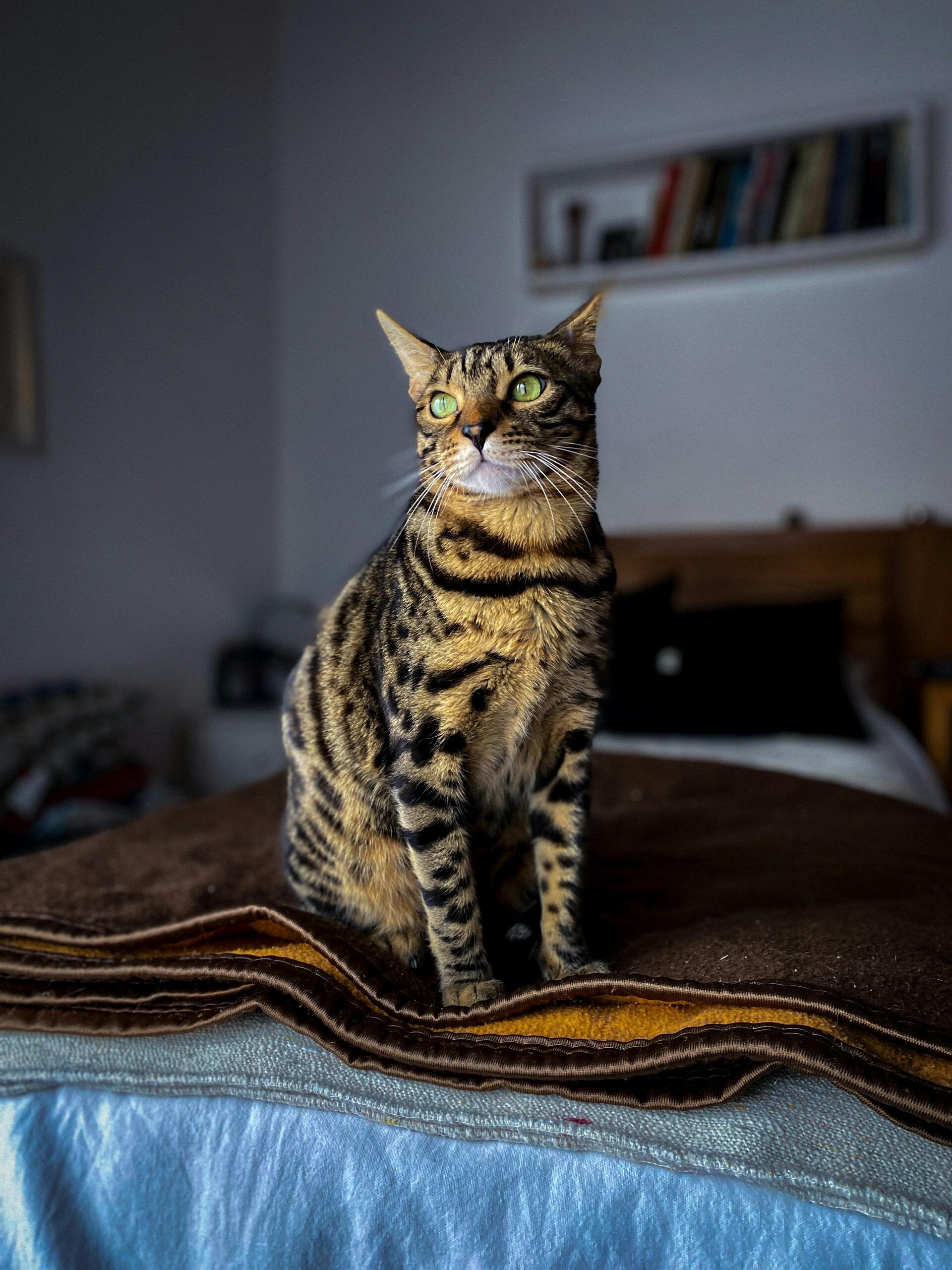
Cat: Savannah
Age: 2 years
Background: Rescue cat; approximately ½ Bengal cat and ½ domestic cat.
Consultation Format:
- Four in-home behavior consultations
- One follow-up phone consultation
---
Presenting Concerns
Brianna sought assistance after Savannah began exhibiting increasingly destructive behaviors throughout the home. These behaviors included:
- Destroying clothing and bedding
- Damaging curtains
- Scratching and clawing the bedroom door
- Early morning zoomies that regularly woke her adopter
Initially, Brianna attempted to solve the problem by closing her bedroom door at night. Rather than eliminating the behavior, Savannah redirected her frustration toward the closed door, causing damage to the wooden surface through persistent scratching.
---
Environmental Assessment
A thorough assessment revealed that Savannah's behavior was not rooted in anxiety, fear, or separation distress. Instead, the behaviors were consistent with a highly intelligent, energetic young cat whose physical and mental enrichment needs were not being adequately met.
Savannah's partial Bengal cat heritage likely contributed to her increased activity level, curiosity, and desire for environmental stimulation. While every cat is an individual, cats with Savannah ancestry often require more opportunities for exploration, problem-solving, and interactive play than many owners anticipate.
Brianna maintained two demanding careers as both a real estate agent and a data entry clerk. As a first-time cat parent, she had understandably underestimated the amount of daily enrichment Savannah required. Her younger brother occasionally cared for Savannah when Brianna traveled.
Rather than assigning blame, the assessment focused on understanding both the cat's behavioral needs and Brianna's busy lifestyle. Successful behavior modification depends on creating realistic, sustainable routines that benefit both the human and feline members of the household.
---
Behavior Assessment
Savannah's destructive behavior appeared to be the result of:
- Insufficient daily physical exercise
- Limited opportunities to express natural hunting behaviors
- Lack of environmental enrichment
- Excess accumulated energy
- Frustration from restricted access to desired areas
These behaviors represented normal feline instincts being expressed in undesirable ways due to unmet behavioral needs.
---
Behavior Modification Plan
A customized enrichment program was developed to fit Brianna's schedule while addressing Savannah's natural instincts.
Recommendations included:
- Two daily 15-minute interactive play sessions using wand-style toys.
- Food puzzles and hidden food stations placed throughout the home to encourage natural hunting and foraging behaviors.
- Installation of a baby gate outside Brianna's bedroom door to reduce further damage to the wooden door while maintaining a visual barrier.
- Supervised outdoor water enrichment using a small kitty pool, as Savannah demonstrated an interest in playing with water.
- Future consideration of harness and leash training to safely expand Savannah's environmental experiences.
- environmental modification such as more climbing cat trees and apparatuses
- (option) wall perches and since Savannah is very energetic a cat exercise wheel.
---
Consultation Philosophy
Although Totally Feline™ frequently conducts consultations by phone or video conference- particularly for cats experiencing severe fear, anxiety, or stress—Savannah displayed no indications that an in-home consultation would negatively impact her welfare.
Because her behaviors were environmentally based rather than emotionally driven, home visits provided valuable opportunities to observe her daily routine, household layout, and interactions within her environment.
Equally important was understanding Brianna's schedule and lifestyle. Recommendations were designed to be practical and achievable rather than overwhelming. Long-term success is far more likely when behavior plans fit naturally into a family's daily routine.
---
Outcome
By increasing structured enrichment, encouraging natural hunting behaviors, and implementing simple environmental management strategies, Savannah's behavioral needs could be met in healthy, appropriate ways while reducing destructive behaviors within the home.
This case serves as a reminder that many unwanted feline behaviors are not acts of defiance but attempts to fulfill normal behavioral needs. When those needs are understood and supported, both cats and their families benefit.
Behavioral Focus: Environmental Enrichment • Environmental Modification • Natural Hunting Behaviors • Management Strategies • Client Education • Practical Behavior Modification
Prepared by: Totally Feline™
Disclaimer & Copyright
The behavior case study presented by Totally Feline™ is based on an actual feline behavior consultation conducted by a certified feline behavior professional. To protect client confidentiality and privacy, certain identifying details—including names, personal information, timelines, and select case-specific circumstances—have been modified. These changes do not alter the educational value, behavioral assessment, or recommended behavior modification strategies discussed.
The information provided is intended for educational and informational purposes only and should not be considered a substitute for veterinary medical advice, diagnosis, or treatment. Behavior recommendations should always be tailored to the individual cat, household, and circumstances. If a cat is exhibiting sudden behavioral changes or signs of illness, consultation with a licensed veterinarian is recommended to rule out underlying medical conditions before beginning a behavior modification plan.
Unless otherwise stated, all written content, case studies, original artwork, illustrations, branding, and educational materials are the intellectual property of Totally Feline™ and are protected under applicable United States and international copyright laws.
© 2026 Totally Feline™. All Rights Reserved.
No portion of this publication may be copied, reproduced, distributed, republished, or transmitted in any form or by any means without prior written permission from Totally Feline™, except for
brief quotations used for review, commentary, or other uses permitted under applicable copyright law.

Create Your Own Website With Webador